Friday, May 21, 2021

Down the street from the office: A tale about teleworking and how to make new fellows feel welcome

Hello, all! My name is Kate Vogel, and in May 2020 I was paired to work with the Maryland Department of Natural Resources as their Coastal Management Fellow. I had just received my M.S. in Conservation Ecology and Environmental Policy from the University of Michigan School for Environment and Sustainability, and I was eager to start something new. After a week of intense interviews, zoom calls, and pacing back and forth in the kitchen with my parents, it was my turn to hear the news… “Congratulations, you’ve been paired with Maryland DNR!” Now, a year later, I definitely feel like the luckiest fellow. Teleworking in the times of COVID isn’t easy, but with a good team, anything is possible.
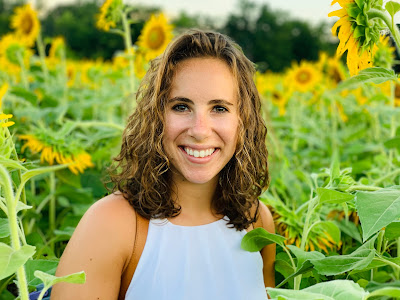
Kate Vogel, Michigan Sea Grant Coastal Management Fellow

Within just a few weeks, I already felt like I was part of the team. My mentors sent me the most amazing care package -- a National Estuarine Research Reserve System (NERRS) shirt, Bergers Cookies, crab-seasoned potato chips, and a postcard with some Assateague ponies on it. I was invited to staff meetings, virtual happy hours, and even the NOAA 312 program evaluation, the five-year NOAA evaluation of the MD Coastal Program. I have to admit, at first it was nerve-wracking to show up in meetings with strangers, but the persistence of my mentors in introducing me to people, asking for my opinions in meetings, and treating me as an equal has been the key to my success. Everyone always has their cameras on in meetings, they never fail to introduce their pets, and they love asking questions about Michigan and sharing their own experiences in our beautiful state. Before I had even moved to Annapolis, it felt like I was starting to recognize people’s faces… my new coworkers even noticed when I got a haircut!

At Assateague Island National Seashore in March to learn about their adaptation efforts.

When I finally moved to Annapolis, I realized I was just a ten-minute walk away from my office, which was my dream, but we were still teleworking. Nevertheless, on my first day of work in August I picked out a cubicle, worked with IT to get my laptop set up, ordered supplies, and explored Annapolis with my fellowship mentor. Working from home in a new state with a new job can be lonely, but starting my job already knowing some of my coworkers has completely changed the experience for me. Since starting, my mentors and coworkers have made it a priority to introduce me to new projects and opportunities in addition to my fellowship project. My main assignment is to write climate change adaptation and resilience plans for Assateague State Park, Pocomoke State Forest, and Browns Branch Wildlife Management area. I am really lucky in that I have been able to go on some incredible site visits to these areas to learn more about the climate change threats and opportunities, in addition to going on monthly hikes with my mentors. Other projects that I have gotten to work on include designing a “Walktober” campaign, planning Nature Play and NatureCity Conferences, participating in the Maryland Commission on Climate Change and in climate change coordination meetings, and many more! Having multiple responsibilities has made me feel very valued as someone new to the unit, and has given me the opportunity to learn about all of the great projects DNR works on!

Often, I am asked what starting a new job virtually was like and how people can support new hires virtually. In my office, we might not go back to work until late fall or early next year, so I think there is a lot of value in asking these questions. Here are my tips:

For Fellows

For Mentors

  • Sign up for new opportunities 

  • Go to the virtual coffee chats, happy hours, etc… even if you don’t participate, it’s great for associating people’s faces with their names! 

  • Research who you are working with to familiarize yourself with the work of your coworkers

  • Ask questions! 

  • Invite your fellows to everything and anything 

  • Use your cameras in meetings

  • Reach out to your new hires and check in on how they are doing, professionally and personally 

  • Introduce new employees to your coworkers! My mentors have done this via 20-minute “hallway chats”


I now live even closer to my office than I did before, and I am grateful to know that when we get to work in-person again I won’t feel like a stranger. Instead, I’ll get to walk by friends and coworkers as I walk down the decorated hallway to my cubicle that overlooks the garden. Starting a new job during a pandemic wasn’t easy, but seeing the development of my climate change plans and getting to collaborate with 25+ people on a new project for the state has been totally worth it, and I can’t wait to see what comes next!

Tuesday, January 5, 2021

From Finalist to Fellow: The beginning of my Knauss journey by So-Jung Youn

My name is So-Jung Youn and, starting February 2021, I will be part of the newest cohort of John A. Knauss Marine Policy Fellows. I’m currently a PhD candidate at the Center for Systems Integration and Sustainability in the Department of Fisheries and Wildlife at Michigan State University. My advisor is Dr. William W. Taylor and my dissertation research is focused on the ecosystem services that the lake whitefish commercial fishery provides to Great Lakes coastal communities in Michigan.

Whether in the field or at outreach events, fisheries biologists like So-Jung often spend plenty of time outdoors. Photo: Julia Whyte

Ever since I heard about the Knauss Fellowship from previous Fellows in my graduate lab, back in 2013 when I first started graduate school, I was interested in working with Sea Grant locally (Michigan Sea Grant) and nationally, hoping one day to become a Knauss Fellow myself. The first step toward that goal was getting selected as a 2021 Knauss Finalist. While Placement Week sounds like it’s always an intense experience, this year’s shift to an all-virtual setting presented some unique moments. After navigating the challenges of technology glitches, random interruptions in internet connectivity, and the fatigue of staring at a screen for hours, I was placed with the Office of Policy and Constituent Affairs in NOAA’s National Ocean Service (NOS). I’ll be working with Glenn Boledovich as an Ocean and Coastal Policy Analyst.

I’m very excited to be a Knauss Fellow and hope the experience will further my interest in how science is translated into policy creation and implementation in order to enhance and conserve our natural resources. While I’ve had some exposure to this process during my graduate school experiences, the Knauss Fellowship will give me the opportunity to observe, and engage with, the process at the federal level. For my career goals, my host office seems like the perfect fit.

I’m excited to start this position and learn more about policy at both the executive and legislative levels of the federal government. And of course, I’m excited to hopefully meet my host office, as well as my Knauss cohort, in person later this upcoming year. 

Lake whitefish, which So-Jung studies, are an important native species in the Great Lakes. Photo: Michigan Sea Grant


Monday, September 14, 2020

Studying rock snot with Molly Wozniak

My name is Molly Wozniak and I am currently a senior at Lake Superior State University (LSSU) studying fisheries and wildlife management, and I work at the Center for Freshwater Research and Education as the Student Education and Outreach Assistant and a Student Field Technician. This summer, I was a Michigan Sea Grant Environmental Intern and presented my research of the effects of Didymosphenia geminata on benthic macroinvertebrates. Today, I’d like to tell you about my research as an Environmental Intern and how I became interested in my research topic. 

Here’s me holding a big pile of didymo! Photo: Molly Wozniak


Last summer, I had the opportunity to spend a few days in the field with the LSSU Center for Freshwater Research and Education Little Rapids Restoration crew that works conducting post-restoration surveys of the Little Rapids of the St. Marys River. The Little Rapids restoration took place in 2016 when a causeway separating the rapids habitat was replaced with a multi-span bridge to restore flow to the previously stagnant area. This restoration was in effort to increase spawning habitat for fishes that live in the area, particularly salmonids. Since this flow restoration, the crew has been collecting larval fishes, aquatic macroinvertebrates, and fish egg samples to determine what species are utilizing this area for spawning and development purposes. 

The Little Rapids area of the St. Marys River where I conducted my field research and worked this summer. Photo: Molly Wozniak


It was so fun to help the crew collect samples, but I noticed that when they would empty their nets into the collection containers, there was a lot of brown, slimy-looking gunk that was also collected. This mysterious gunk is actually a type of algae that is commonly referred to as “rock snot” or “didymo” (scientific name Didymosphenia geminata). I was instantly fascinated by this because didymo is an under-researched invasive species that grows on rocks in the substrate and produces long, dense stalks when it blooms, which is what the crew was collecting with our samples. Didymo is considered a nuisance due to these stalks because it has been found that they can smother the bottoms of rivers, thereby often reducing the quality of aquatic macroinvertebrates living in the ecosystem as well as being very visually unappealing to everyday recreationalists. Didymo is found throughout the world, particularly in New Zealand, where most research has taken place, but the St. Marys River is the only place it is found in Michigan. 

Stalks of didymo can be seen on the rocks from above the water in the St. Marys River. Photo: Molly Wozniak


After I first became familiar with didymo, I was so fascinated by it and was eager to learn more. I decided that I wanted to involve didymo with my senior thesis project at LSSU. This past summer, I was able to work on the Little Rapids Restoration crew and conduct my research through my Environmental Internship. My project consisted of sampling for benthic macroinvertebrates in areas with didymo and where didymo was manually removed. Finding sites to sample initially proved to be a challenge due to high water levels limiting accessibility to ideal sampling sites (and trying to put on a wetsuit for sampling was no easy task either). However, we were able to persevere and find sites that worked. 

Molly and her research mentor, Dr. Ashley Moerke, are ready for field sampling after getting their wetsuits on. Photo: Molly Wozniak


Each site had paired quadrats that were sampled for aquatic invertebrates before any didymo was removed. After this initial sampling, one quadrat at each site was scrubbed clean of didymo, acting as the treatment and those still with didymo as the control. The sites were then sampled two weeks later to see if there was any difference in the macroinvertebrates collected. After collecting my data and spending time in the lab identifying all of the aquatic insects collected, which is a beloved activity of mine, I was able to finalize my results and present them at the Michigan Sea Grant Environmental Internship Symposium.

A control plot from my research sites. Didymo can be seen heavily coating the rocks in the area and the colored rocks mark the borders of the sampling area. Photo: Molly Wozniak


I found that there was not a significant difference in the number of species of macroinvertebrates collected between the control and treatment plots and between initial and post sampling. Previous studies have shown that the tolerance quality of insects typically decreases in areas with didymo, but that did not seem to be the case in my project. This may be because it was a small area sampled (0.25m² per sampling event) or because the water quality and habitat of the area is of good quality. These conclusions will be further processed.

One of the treatment plots that was scrubbed clean of didymo for my research. It’s crazy to see the difference between the two plots! Photo: Molly Wozniak


Throughout my Michigan Sea Grant Environmental Internship, I learned so much and was able to have so many amazing experiences, like sharing my passion for my research to a broad audience at the Symposium. If you would like to learn more about didymo and how to prevent it, I created an outreach webpage as a part of my internship that is free and available to visit: https://www.lssu.edu/cfre/research/rock-snot/ and if you have any questions, please feel free to reach out to me at mwozniak1@lssu.edu.

Friday, August 28, 2020

Julianne Grenn's Grayling Hatchery Gazette

Note: Julianne wrote about her work as one of Michigan Sea Grant's 2020 summer interns. She even produced a fully laid-out PDF version of her Hatchery Gazette. Click here to read it! 

A family safely visits the Grayling Hatchery during Summer 2020. Photo: Julianne Grenn

My name is Julianne Grenn, and I am a Biology major at Lake Superior State University (LSSU). I am the first Anglers of the Au Sable Summer Research fellow, a new partnership between the Anglers and LSSU. One of my primary responsibilities is to create an operations manual for the Grayling Fish Hatchery and increase educational information for visitors. My work at the hatchery has helped deepen my appreciation and understanding of aquaculture and community outreach, and I hope your knowledge and interest will be expanded too. 

Kids can fish in the Children's Pond for free. Photo: Julianne Grenn

Many of you may be unaware of the Grayling Fish Hatchery's history, but it has a long one and has been in existence for over 100 years! The Grayling Fish Hatchery was established in 1919 by Rasmus Hanson and several fellow sportsmen, including Henry and Edsel Ford. Their intent was to reintroduce Grayling to local waters. Unfortunately, many of the fish did not survive, and production was switched to raising Brook, Brown, and Rainbow Trout, the Au Sable varieties we know and love today. The hatchery operated under private ownership until the state of Michigan bought the facility in 1926. Since then, the hatchery has changed ownership several times, passing from the Department of Natural Resources (DNR) to commercial fish producers, and finally to Grayling Hatchery Incorporated in 2017.

Our mission is to establish the hatchery as a hub of learning and discovery--a place where all can come to experience the wonders and beauty of the Au Sable River. We aim to educate our guests about the history, ecology, and conservation of the Au Sable River for generations. 

Visitors can explore the hatchery facility. Photo: Julianne Grenn

We are currently raising 1,300 Rainbow Trout, which were donated by the MI DNR. Following our mission to preserve and protect the Au Sable, fish are reared at low densities to provide a local attraction while conserving the river. Additionally, the hatchery partnered with the Anglers of the Au Sable to conduct water quality tests at locations above and below the hatchery to ensure that phosphate and total suspended particle loads are minimized.

We continue to work alongside scientists and advocacy groups to limit our footprint on the environment and provide learning opportunities for all who visit the hatchery. At the end of the summer, all of the trout are transferred to local lakes where anglers can pursue them.

We are open to the public on Saturdays and Sundays from 12-4 pm and offer a variety of engaging activities for guests. Due to COVID 19, we cannot provide fee-fishing, but those ages 16 and under are welcome to fish in the Children's Pond for free. Guests also can feed the trout in two of our raceways and the king-sized bluegill and painted turtles in the Children's Fishing Pond. Visiting our turtle sanctuary is a special treat, as it houses a rare Blanding's Turtle and is one of the more popular attractions for children. 

The Blanding’s Turtle who lives in the turtle sanctuary might pose for photos. Photo: Julianne Grenn


This year's improvements spread beyond the logistical functions of the hatchery. A live streaming trout camera will be installed along a portion of the Au Sable River. Trout-cam footage will be available to the public through the hatchery's website, LSSU's Center for Freshwater Research and Education page, and the Grayling Visitors Bureau website. Additional efforts also are underway to enhance the facility's aesthetic appeal. 

A mural of an Arctic Grayling will be painted on the back of the new visitor's center by a local artist! The interior of the center, formerly the admission building, has already been painted, and both the indoor and outdoor spaces will feature nearly 30 informational signs. These improvements culminated with the publication and release of the hatchery's first self-guided tour brochure. 

The resident Blanding's Turtle soaks in some sunshine. Photo: Julianne Grenn

Grayling Hatchery Incorporated continues its efforts to establish a facility that attracts families and researchers while educating visitors on the unique natural resource we have in our backyard - the Au Sable River. Ultimately, our purpose is to serve the community and the Au Sable River. The Grayling Fish Hatchery strives to preserve, protect, and enhance the relationship between our families, our Anglers, and nature. We hope you can visit the Grayling Fish Hatchery to experience all of our education and conservation initiatives firsthand. We have been hatching inspiration since 1919.

Friday, February 28, 2020

Professional development adventures with Kathryn Frens

Hi everybody! Since my last post was about a regular day in the office, this one is about the cool stuff outside the office that you get to do because you’re a Knauss Fellow. Professional development (PD) encompasses a lot of things, from conferences to tours of Congress to communications workshops. All fellows get some money to spend on PD, and host offices give you time for it. So how did I spend my PD money?

I went to Michigan and networked. I did eight informational interviews and a tour of GLERL (the Great Lakes Environmental Research Laboratory) in three days. This was not glamorous but was extremely informative and I’m really glad I did it now that I’m applying for jobs. 

I went to West Virginia and took a class about planning for climate change. This training course was focused on planning processes in general and also on scenario planning, which has been a big part of my fellowship research. It was held at the National Conservation Training Center, which is the U.S. Fish and Wildlife’s training center/summer camp in the woods.

I went to the Gulf of Mexico and fished for sharks. This was probably the coolest thing I did during my fellowship, and it was also practical in that it gave me some hands-on fishery experience (I didn’t have any before.) I learned how a longline works and how to pull otoliths, among other new skills. Also, SHARKS!!!! 

Sharks! Photo: Kathryn Frens
I went to Hawaii for a really great conference. The Society for Advancement of Chicanos/Latinos and Native Americans in Science (SACNAS) had its annual conference in Honolulu this fall. SACNAS is a conference about diversity/inclusion in STEM. It was energizing and inspiring and I made some good connections as well. 

Leis and lanyards at SACNAS in Hawaii. Photo: Kathryn Frens
Other PD-related activities happened closer to home. I took notes for a meeting of the leadership of NOAA Research, which was like getting to be a fly on the wall in The Room Where It Happens. I attended a training about salary negotiation, toured the White House and Congress, went to some briefings on the Hill, and was part of the Knauss Diversity, Equity, and Inclusion Committee. 

The Knauss cohort. Photo: Kathryn Frens
This is my last post for this blog, and I think you’ll hear from the new Fellows soon. I’ll be defending my dissertation in a few months and then, I hope, will be able to find a “real” job. If you are reading this post because you’re thinking about applying for the Knauss, you should apply. I feel like the fellowship set me up for success both in the fellowship year itself and for afterwards.

So long, and thanks for all the fish.

Thursday, December 5, 2019

A day in the life of Knauss Fellow Kathryn Frens

Hi everybody!

Like Jillian did a couple of months ago, I’d like to give you all a walk-through of a random day in my life as a Knauss Fellow in the National Marine Fisheries Service Office of Sustainable Fisheries. I decided to do this blog when I got into work this morning, so I’ll be writing about my day as it happens. I have two meetings and a webinar scheduled, which is a bit more than usual, and I have several long-term projects going.

8:30 am: Get to work, read emails, go over schedule for the day and prioritize.

9:00 am: Meet with co-workers to update each other on the status of three pieces of guidance working their way through the release process. These documents all have to do with National Standard 1 (in the Magnuson-Stevens Act) and are meant to help managers decide how best to calculate how much fish should be caught in a given year. This is more complicated than it sounds, and we’re coordinating three groups of high-level scientists and managers scattered all over the country.

10:00 am: Sit down to edit the white paper on scenario planning methods that I’ve been working on for a while. This document will eventually be published by NOAA so that managers who are interested in scenario planning can get a beginner-friendly rundown of the process.

10:45 am: Phone rings. It’s Ryan from one of the regional fisheries offices, calling to talk about some data he has on the outcomes of NMFS’s Bycatch Reduction Engineering Program grants. I’m trying to find out how often the research funded by these grants actually affects management, but I have to rely on people like Ryan, who are on the ground in the regions, to get the data for me.

11:00 am: Team meeting. We get updates on some external meetings that happened recently and talk about how to get or create good graphics for our presentations.

12:00 pm: Lunch at my desk while getting application materials together for a federal job.

12:30 pm: Go through more comments on the scenario planning white paper.

1:00 pm: Tune in to a webinar about navigating climate-driven ecological transformations.

2:00 pm: Livestream a House Water, Oceans, and Wildlife subcommittee hearing.

3:30 pm: Back to the scenario planning white paper.

4:45 pm: Write down what I did today and my priorities for tomorrow.

5:00 pm: Writing group with friends! (Don’t know who needs to hear this, but finish your dissertation before you start your Knauss.)

And that’s a day in my life! I hope this was helpful. Instead of posting pictures of me at my desk, I’ve included some fish I like. Three of them are tangentially related to my next post, and the other is a cowcod.


Thursday, October 24, 2019

Worms, watersheds, and the Anthropocene: Remarks from Jillian Mayer

These remarks were given to volunteers of the Smithsonian National Museum of Natural History by 2020 Knauss Fellow Jillian Mayer. Jillian took the photos at the youth-led Global Climate Strike March to the U.S. Capitol on September 20, 2019.

Photo: Jillian Mayer
Thank you, Meaghan and the Museum, for having me today. All opinions are my own. 

Everyone: look down at your feet. Wiggle your toes in your shoes, and feel the ground beneath them. Recall the path you took to get here tonight. That path, this ground, is first and foremost stolen indigenous land. The community that once called this land home is the Piscataway (and related tribes) and is, by the way, still around. Before we talk about the ocean, we have to understand the land. Part of that means addressing that we have stolen it from others, and are borrowing it from future generations. Let’s take one moment to thank the people that stewarded this land before we were here, and those that will care for it long after we’re worm food.

Speaking of worms: Consider the physical characteristics of the ground. What does it smell like? How many rodents are burrowing beneath us? How many thousands of seeds lie dormant, waiting for a crack in the concrete? Go further down and you’d hit rock, then water, then rock, and eventually magma and a molten iron core. (I think that’s true, though thankfully none of us are geologists up here).

Every step you took tonight happened in a watershed. Every drop of liquid that falls on the surface of that watershed ends up in a stream, which runs to a river, which runs to the sea. The oceans are the headwaters of the skies, and the skies return that water to us as precipitation. The hydrologic cycle!
Photo: Jillian Mayer
There are literally countless ways that humans are impacting our seas in the Anthropocene — or as I call it, the Anthroposeas. Can I have some examples of the ways we’ve impacted water? (Call them out)...

Here are some facts about the Laurentian Great Lakes, because I’m an “expert”: 
  • Largest source of surface freshwater on earth; coastline is longer than Atlantic and Pacific coasts; water flows from Superior to Ontario; shallow.
  • During the Paleozoic Era, which ended about 250 million years ago, the Great Lakes region was a shallow sea.
  • The Great Lakes formed 10,000 years ago with the retreat of the Laurentide Ice Sheet. 
  • Before European settlement, the land held the Anishinaabe civilization, consisting of the “three fires:” Potowatomi, Ojibwe/Chippewa, and Odawa – healthy forests, clean lakes.
  • European settlement began in the mid-1850s: mostly trading (furs).
  • Intensive logging and polluting factories shaped the region in the late 1800s – early 1900s: clear-cut old-growth forests, hammered rivers, intense runoff and flooding.
  • First problematic invasive species: sea lamprey come in ballast water, decimate lake trout
  • 1950s: alewife 
  • 1960s: stocked Pacific salmon 
  • St. Lawrence Seaway opened in 1959 — invasives galore 
  • 1990s: zebra mussels 
  • 2000s: quagga mussels 
  • 2000s: Asian carp 
  • Today: upper lakes are oligotrophic, lower lakes are eutrophic; invasive predators and prey; highly managed lake levels – A MESS
Photo: Jillian Mayer
Here’s where I neatly pivot to telling you to VOTE. I’m now a NOAA-Sea Grant Knauss Legislative Fellow in a senior senator’s office. Here are some observations I’ve made: 
  1. Wearing business attire every day is miserable.
  2. Honoring treaties with Native American tribes and generally throwing our movement’s whole weight behind the unique goal of indigenous sovereignty would solve most of our problems.
  3. Surprisingly, it turns out that Congress can’t make people do anything. It appears that the goal of policy in our governance structure is to open better paths to better futures. It’s not hand-holding, it’s not hand-dragging. (This is a cheer-ocracy). 
  4. We can and should explain environmental, climate, and oceans issues in language that our audience understands, including the language of economics, patriotism, religion, autonomy, and other values we may not hold. Our own subjective motivation for saving the planet is just that: subjective. Earth is far past the point at which we can sit atop our high moral horses. As scientists, activists, and educators, we must challenge ourselves to find new ways of explaining, showing, understanding, knowing, and solving the complex (primordial) soup of crises we face. 
  5. Go vote. Help register people to vote. Volunteer to drive people to the polls. Do this regardless of party affiliation. Less than 50% of the eligible US population votes. For communities of color especially, exercising this constitutional right has become harder since the repeal of the Voting Rights Act — and everyone suffers when some of us aren’t free. To quote poet Staceyann Chin, “All oppression is connected.” Voting is one tool of many in our toolbox. We need and have a thriving ecosystem of strategies to build a better future. But don’t forget to vote. 
  6. Finally, to quote journalist Mary Schmich and musician Baz Luhrmann, “wear sunscreen.”
    Photo: Jillian Mayer

Tuesday, August 20, 2019

Women Who Fish Have Stories To Tell: Part 2

By Erin Burkett, Michigan Sea Grant Graduate Research Fellow

In my previous blog, I described the process of facilitating a community-engaged research project about Michigan women who fish for recreation. I used a method called photovoice that combines individual photography with group discussion and storytelling to highlight 15 participants’ unique perspectives. The project culminated in two major events: a photography exhibit at the Carnegie Museum of the Keweenaw and a public presentation at a meeting of the Metro-West Steelheaders Association.
April Tang presenting to the Metro-West Steelheaders Association in Livonia, Michigan, on June 4, 2019. Photo: Erin Burkett
Now that the major events are wrapped and the project is coming to a close, I am writing up my findings for publication in a scientific journal. There are a lot of options for analyzing qualitative social science data, and I’m using a process called grounded theory. A lot of research applies a pre-existing scientific or theory-based idea to data, but grounded theory is useful when you want to remain true to participants’ own words, ideas, and personal expertise. The major steps of grounded theory include data coding (assigning labels to sections of text that represent what each section is about), memoing (writing down analytical ideas as you go through your data), and developing a case-specific theory or theories. Combining photovoice with grounded theory is a feminist participatory approach to social research because women’s fishing experiences aren’t often shared or highlighted in academic studies.

One of my findings is that, for these women, fishing isn’t about the fish. Well, almost. Catching a beautiful brook trout or their first northern pike was certainly memorable for these women, but fishing provides them with many other benefits and satisfying experiences. For some, connecting to water and nature and “getting away from it all” was important, and for others it is the empowerment and sense of accomplishment that fishing brings that drives them to fish. 
"Sleepy rivers soothe the soul" Photo: Cori Fitzpatrick
Many of the women expressed being the “token woman” in their circle of fishing buddies, and this certainly created social obstacles to fishing that we discussed quite a bit. But this wasn’t always the case. A few learned all they know about fishing from a strong female role model like a grandmother or mother, and by participating in the project the participants made new, fishing-related connections with each other and other women in their social circles. Finding other women to fish with was particularly important to April Tang, project participant and member of the Flygirls of Michigan: "I joined the Flygirls of Michigan group and the women there have helped me build my skills and opened up more fishing opportunities. On this guided trip, I caught my biggest steelhead so far. It was a brutally cold day, like most days when steelhead run the rivers. My boatmate and I persisted, and she ended up catching an even bigger beast! The Flygirls have really been a wonderful, supportive community for me.”
April Tang with her steelhead on a freezing day on the river. Photo: April Tang
Uncovering and highlighting stories of women fishing is important because this doesn’t often happen in the public eye. It can also help us to overcome what are sometimes very deeply-rooted beliefs about women in the context of outdoor recreation. It also reminds us that women cannot all be lumped into a single group because they are each individuals with varying identities and personal reasons for fishing.

Monday, July 8, 2019

A day in the life of a Knauss Fellow (celebrity sightings not guaranteed)

By Jillian Mayer

Jillian snapped a photo with activist/"Queer Eye" star Karamo Brown and actor/comedian Alec Mapa at a staff briefing on LGBTQ+ adoption. Photo: Jillian Mayer
As a current NOAA-Sea Grant Knauss fellow working in a Democrat Senator’s office, I am often asked what I do all day. To help answer that question, I tracked my schedule on a random Thursday at work. I hope this is a helpful snapshot for potential applicants and future fellows:

9am: Workday started

9am-10am: Sorted emails received overnight into folders by subject and priority

10am-11am: Drafted – and later edited and finalized – a press release on toxic PFAS chemicals found in firefighting foam in anticipation of the Senator’s press event on the topic the following day

11am-11:30am: Wrote my mid-year report for Michigan Sea Grant

11:30am-12:30pm: Finished editing and sent a letter I wrote on behalf of the Senator to the Government Accountability Office requesting an investigation into non-competitive oil and gas leasing on public lands

12:30pm-3pm: Conducted online research for a new letter I was tasked with on the safety and efficacy of over-the-counter sunscreens

3pm-4pm: Drafted said letter on behalf of the Senator to the Commissioner of the Food and Drug Administration

4pm-5pm: Checked in with supervisors and colleagues about priorities for the next week

5pm-6pm: Caught up on a webinar by the Environmental Law Institute on the basics of the Clean Water Act

6pm: Workday ended

I’ve gotten into the bad habit of eating lunch at my desk while completing other tasks, but we are encouraged to take an hour-long lunchbreak. This schedule did not include other common activities like meeting with constituents, preparing the Senator for committee hearings or floor action, collaborating with other legislative offices, and attending staff briefings on any topic.

Additionally, almost everything on the above schedule was – or could be – done in collaboration with colleagues in my office. I find my office to be very collaborative, which I deeply appreciate and know is not the case with all Knauss fellows’ placements.

I hope this helps!

Jillian and colleagues with Senator Elizabeth Warren in the U.S. Capitol. Photo: Jillian Mayer
Jillian with presidential hopeful "Mayor Pete" Buttigieg at a pro-choice rally on the Supreme Court steps. Photo: Jillian Mayer

Easing into life at NOAA

By Kathryn Frens

Hello, blog readers. I’m a 2019 Executive Knauss Fellow, currently placed in NOAA’s Office of Sustainable Fisheries. In this post, I want to give you an idea of what it’s been like to walk in my (flat, but professional) shoes for the first two months of my fellowship. I’m not going to cover Placement Week: Lisa did a very good job of that last year, and I bet a smart reader like you can find her post. Instead, I’m going to talk about starting my fellowship and a few things I’ve learned already. You ready for this? Let’s go.

The longest government shutdown in history ended less than a week before I was supposed to start work at NOAA. Because my supervisor was furloughed, she couldn’t come into the office and had no way to plan for my arrival. Nobody was processing security clearances or access cards or finances, initially. So I started a week late, and everyone was still recovering from the furlough when I got into the office. And because everybody asks, that’s the only way that national politics has affected my fellowship. I thought working in DC would involve more politics, but it turns out that my office is very apolitical. NOAA’s leadership is appointed by the president, but my office mostly works with laws and regulations that change more slowly than administrations. Some days, it doesn’t feel like we’re inside the Beltway at all.

My first month of work was slow. I scheduled one-on-one meetings with everyone in my office to learn about what they do (they do a wide variety of things and have a ton of expertise about those things), and I did a lot of background reading. While I knew what areas of fisheries management interested me, I did not know how to translate those areas of interest into actual concrete projects. In addition, my supervisor was in her position temporarily, and my permanent boss came back about a month after I started. Things didn’t really start to pick up until about six weeks in.

I’m telling you this because some of you reading might be future fellows, and it’s important to know that every fellow’s experience is different. My slow start stressed me out, especially when I was hearing from other fellows about how busy they were and what groups they were already leading. It was only in talking with past fellows that I found out how common my experience is, especially in an office (like mine) that didn’t have a fellow last year. Here are some other important things to know:
  • NOAA loves it some Knauss fellows. Lots of people here were fellows previously and they’re happy to help you out or give you advice. Just ask!
  • You will never find shoes that are both comfortable enough to commute in and professional enough to wear in the office. Keep your nice shoes at work and walk to the Metro in your hiking sandals; you won’t regret it. 
  • This fellowship feels like a weird combination of work and learning. I tend to be very focused on how I can contribute and what I can accomplish. This fellowship involves contributing and accomplishing, but my office expects me to also spend time on my own education, which is not always comfortable when everybody else is working so hard! I attended the Mid-Atlantic Marine Fisheries Commission meeting just to see how the management process works, and I’m going on a shark survey cruise this summer—both things I don’t think I would have been able to do if I wasn’t a fellow. 
  • The best things about DC are the museums and the food. And the museums are free, which helps you afford the food. 
I’d love to hear from whoever is reading this blog about what you want to know. I’m happy to answer questions or expound further on what you’re curious about. I don’t have any cool travel pictures yet, but here’s one of me in my new office space. I took this picture for an elementary school career day presentation about what scientists do—another really fun experience!
Kathryn is hard at work in the NOAA office. Photo: Kathryn Frens